Gold Jewelry in Bali: A Legacy of Art, Culture, and Elegance
Introduction
Bali, Indonesia’s renowned “Island of the Gods,” is not only celebrated for its lush landscapes, temples, and traditions but also for its exquisite craftsmanship — especially in the realm of gold jewelry. Balinese gold jewelry is more than adornment; it is a manifestation of centuries-old artistry, deep spiritual meaning, and cultural identity. Whether worn during religious ceremonies or crafted for modern fashion, Balinese gold jewelry continues to captivate the world with its intricate detail and timeless beauty.
Historical Background
The tradition of goldsmithing in Bali dates back over a thousand years, influenced by Indian, Chinese, and later Javanese cultures. The Majapahit Empire (13th–16th centuries), which spread Hinduism and advanced metallurgy to Bali, played a crucial role in the development of fine metalwork. During this period, gold and silverwork flourished, with artisans creating jewelry for royalty, priests, and the elite.
Gold was historically viewed as a sacred material, symbolizing purity, divine energy, and wealth. The knowledge and skills of goldsmithing were passed down through generations in artisan families, primarily in villages like Celuk in Gianyar and Mas near Ubud, which are still famous for their jewelry craftsmanship today.
Cultural and Spiritual Significance
Gold jewelry in Bali is deeply intertwined with religious and ceremonial life. It is not merely ornamental — each piece often carries spiritual meaning.
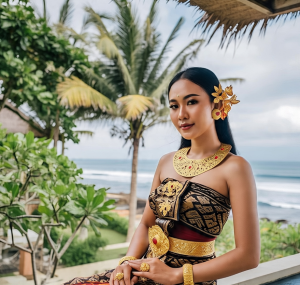
- Ceremonial Use: Gold jewelry is commonly worn during temple ceremonies, weddings, and other rituals. For example, the Balinese bride may wear an elaborate crown and layers of gold necklaces and earrings to signify purity, prosperity, and the sanctity of the union.
- Symbolism: Designs often include Hindu and animist symbols such as:
- Lotus flowers – representing spiritual enlightenment.
- Garuda – a mythical bird and vehicle of Vishnu, symbolizing power and protection.
- Dragons or naga – guardians of sacred spaces and energies.
- Spiritual Beliefs: It is believed that gold jewelry can carry spiritual energy and protect the wearer from negative forces.
Styles and Types of Balinese Gold Jewelry
Balinese gold jewelry is known for its high level of detail, ornamental complexity, and symbolic motifs. Here are some common types and styles:
1. Filigree Work
Filigree is a delicate jewelry technique involving twisted gold wires shaped into lace-like patterns. Balinese filigree is admired worldwide for its intricacy and fine craftsmanship.
2. Granulation
This technique involves the application of tiny gold spheres to create texture and depth. Balinese granulation is often used alongside filigree.
3. Traditional Jewelry Pieces
- Subeng: Large, circular gold earrings often worn during traditional ceremonies.
- Pending: A pendant necklace with religious or mythological designs.
- Gelung Agung: A towering headdress made from gold-plated materials for ceremonial use.
- Kalung: A general term for necklaces, which can be simple or elaborate.
4. Modern Adaptations
Today, many Balinese jewelers blend traditional methods with modern aesthetics, producing:
- Minimalist gold rings and bracelets
- Contemporary earrings with ethnic flair
- Custom-made wedding bands featuring Balinese motifs
Craftsmanship and Production Process
Creating gold jewelry in Bali is a meticulous process that requires both technical skill and artistic vision. Many jewelers still use handcrafted techniques passed down through generations.
Steps in Making Balinese Gold Jewelry:
- Designing: A sketch is made, often inspired by nature, mythology, or spirituality.
- Casting: The gold is melted and cast into a basic shape.
- Hand Detailing: Techniques like engraving, filigree, and granulation are applied.
- Polishing: The piece is refined and polished to achieve its final look.
- Blessing (Optional): Some traditional jewelers perform a ritual blessing before or after the jewelry is completed.
The most commonly used gold purity in Bali is 22-karat, although 18K and 24K variations are also found depending on the design and purpose.
Famous Gold Jewelry Centers in Bali
- Celuk Village: Renowned for both gold and silver jewelry, Celuk is home to generations of goldsmiths. Many workshops offer demonstrations and custom jewelry services.
- Ubud: Known for its artistic spirit, Ubud features galleries and boutiques that showcase fine handmade gold pieces.
- Kuta and Seminyak: These tourist hubs feature modern jewelry stores offering fusion styles and luxury designs.
Modern Trends and Global Appeal
As global fashion becomes more conscious of culture and sustainability, Balinese gold jewelry has gained attention for its ethical production, heritage value, and unique aesthetics. Many designers collaborate with local artisans to create collections that honor tradition while appealing to contemporary tastes.
In addition, the demand for custom-designed and spiritually meaningful jewelry has led to a rise in bespoke gold pieces that incorporate mantras, birth symbols, or protective charms.
Conclusion
Balinese gold jewelry is more than a visual masterpiece — it is a cultural treasure that bridges the past and the present. With its roots in spirituality, craftsmanship, and artistry, gold jewelry from Bali remains one of the most refined expressions of the island’s soul. Whether you’re a collector, a fashion enthusiast, or a cultural explorer, owning a piece of Balinese gold jewelry means carrying a fragment of Bali’s magic and legacy with you.